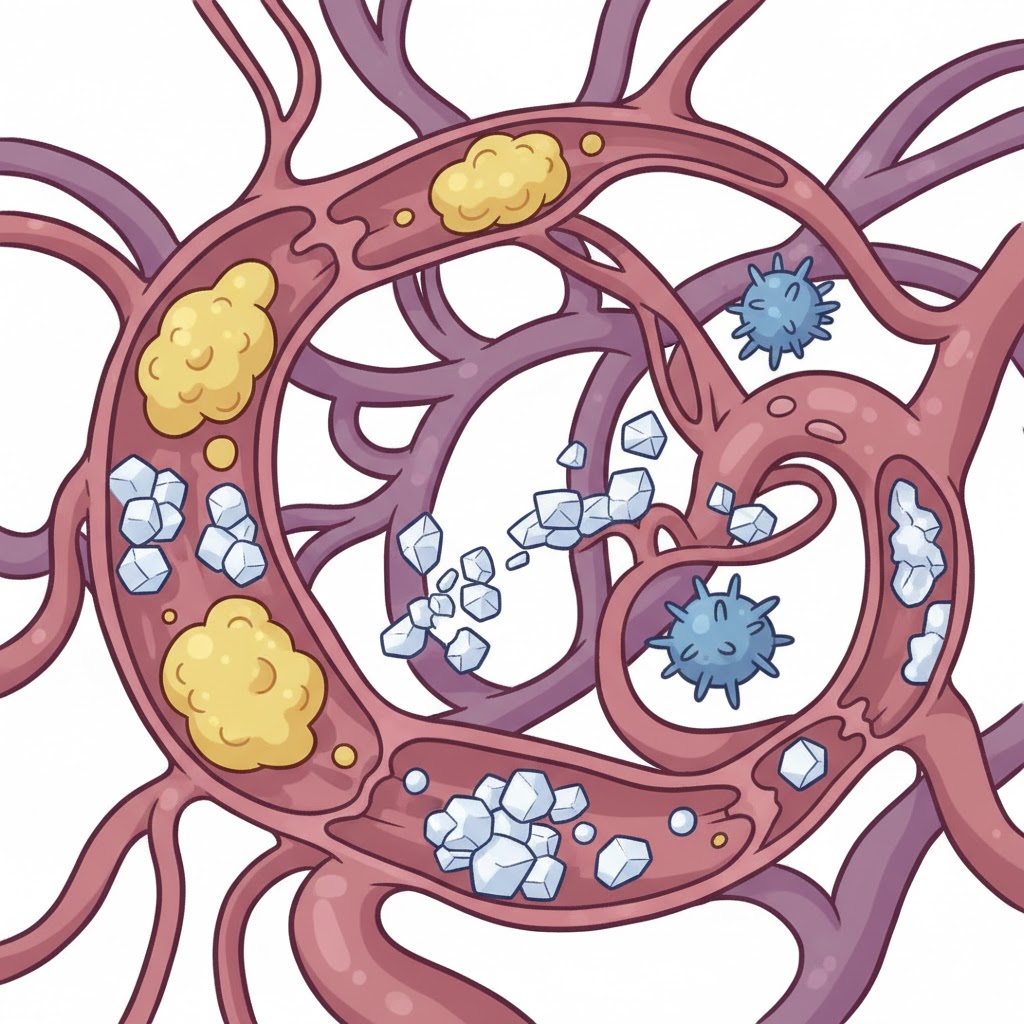
Hyperlipidemia (dyslipidemia)

Hyperlipidemia, also known as dyslipidemia, is a condition in which the amount of fat (lipid) in the blood exceeds normal levels, including increased bad cholesterol (LDL), increased triglycerides, or decreased good cholesterol (HDL). This is a major risk factor for cardiovascular diseases such as coronary heart disease, myocardial infarction, and stroke.

Dyslipidemia, also known as hyperlipidemia, is a condition in which the concentration of fats (lipids) in the blood exceeds normal levels. This includes forms such as increased cholesterol (both LDL-C and/or total cholesterol) and/or increased triglycerides, or decreased HDL-C (good cholesterol). Dyslipidemia can cause many serious health problems, especially cardiovascular disease.

Reason

Reason

Several factors can contribute to hyperlipidemia (abnormal levels of lipids…

Prevention and treatment:

Prevention and treatment:

Healthy Diet Physical Activity Weight Management Quit Smoking By combining…

Symptom :

Symptom :

Dyslipidemia is often called a “silent condition” because it usually…

Types of lipid disorders:

Types of lipid disorders:

Types of dyslipidemia describe different patterns of abnormal blood lipid…

Metabolic disorders in children and adolescents

Metabolic disorders are conditions in which the body has difficulty or is unable to convert nutrients (such as sugar, protein, fat) into energy. They are mainly caused by deficiencies or abnormalities in enzymes, hormones, or transport proteins due to genetic mutations. As a result, some nutrients accumulate in excess and are toxic to the body, while others are deficient, leading to damage to organs such as the brain, liver, kidneys, and heart. The disease can manifest at birth or appear later in adolescence or even adulthood.

Symptom :

Symptom :

Signs of metabolic or inherited disorders in children…

Reason :

Reason :

Causes of metabolic disorders can generally be divided…

Formats:

Formats:

Metabolic disorders can affect the processing of proteins,…

Prevention and treatment:

Prevention and treatment:

Healthy Diet Physical Activity Weight Management Quit Smoking…

Symptom :

Symptom :

Signs of metabolic or inherited disorders in children vary by…

Formats:

Formats:

Metabolic disorders can affect the processing of proteins, fats, and…

Metabolic Syndrome

Metabolic syndrome is a group of health risk factors that increase your risk of heart disease, stroke, and type 2 diabetes. These include abdominal obesity, high blood pressure, high blood sugar, and abnormal cholesterol levels.

Reason :

Reason :

Metabolic syndrome is a cluster of health risk factors that…

Measure :

Measure :

Metabolic syndrome is a group of health risk factors that…

Metabolic syndrome

Metabolic syndrome is a cluster of health risk factors that increase your risk of heart disease, stroke, and type 2 diabetes. These factors include abdominal obesity, high blood pressure, high blood sugar, and abnormal cholesterol levels.

Symptom :

Symptom :

Dyslipidemia (hyperlipidemia) is often called a “silent condition” because it usually causes no symptoms for many…

Reason :

Reason :

Atherosclerosis is a chronic condition in which fatty deposits, cholesterol, calcium, and other substances accumulate on…

Danger:

Danger:

Risk factors for atherosclerosis include dyslipidemia, hypertension, diabetes, obesity, smoking, and physical inactivity. These conditions individually…

Prevention and treatment:

Prevention and treatment:

Healthy Diet Physical Activity Weight Management Quit Smoking By combining a balanced diet, regular physical activity,…

Danger:

Danger:

Risk factors for atherosclerosis include dyslipidemia, hypertension, diabetes, obesity, smoking,…

Symptom :

Symptom :

Dyslipidemia is often called a “silent condition” because it usually…